
Car accidents can happen in seconds, but the effects can last much longer. A crash can leave you with injuries, medical bills, lost income, vehicle damage, and other costs. If you were hurt in Augusta or nearby, an Augusta car accident lawyer at Van Sant Law can help you understand your legal options.
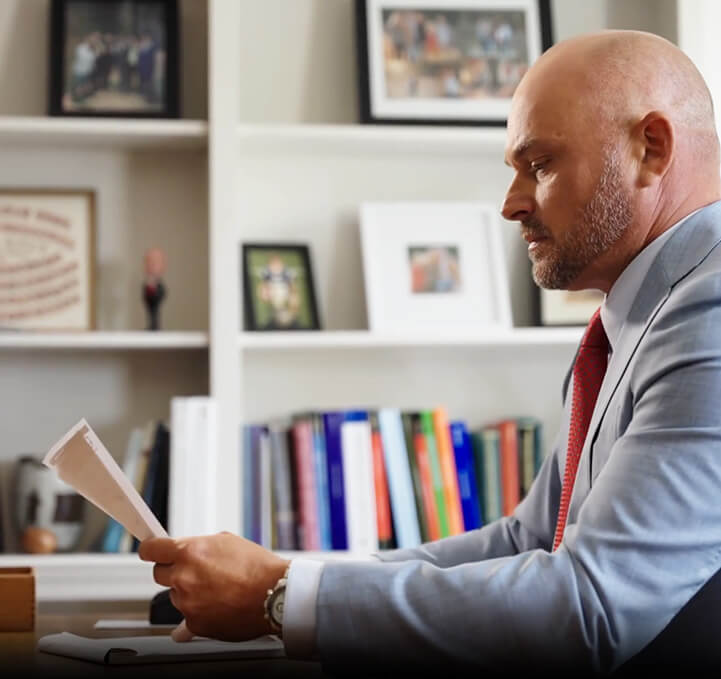
Van Sant Law represents people injured in car crashes throughout Georgia. The firm takes a trial-ready approach and can investigate the crash, gather evidence, and deal with insurance companies while you focus on your recovery.
David Van Sant is personally involved in every case. The firm also offers free consultations and works on a contingency fee basis, so you do not pay attorney fees unless the firm recovers money for you. Reach out to us for a free consultation with an Augusta personal injury lawyer.
Why Hire Van Sant Law for Your Car Accident Case?
A car accident claim may involve more than simply showing that another driver caused the crash. Insurance companies may question fault, your injuries, or the amount of your losses. Having an Augusta car accident lawyer review the claim can help you understand what evidence may be needed. Van Sant Law provides:
- Attorney-first representation: David Van Sant is personally involved in every case.
- Trial-ready preparation: Cases are prepared with the possibility of trial in mind.
- Insurance defense insight: Van Sant Law has experience representing insurance companies and understands how insurers review claims.
- Personal attention: The firm works directly with clients throughout the claims process.
- Contingency fees: You pay nothing unless the firm recovers money for you.
Van Sant Law can also help preserve evidence before it is lost or becomes harder to find. This may include police records, photographs, vehicle information, witness statements, video footage, and other evidence from the crash.
Common Causes of Car Accidents in Augusta
Car crashes can happen for many reasons. Some involve a driver’s choices, while others may involve road conditions, a vehicle problem, or more than one factor. Some of the more common causes include:
- Distracted driving, including texting or using a phone.
- Drunk or impaired driving.
- Speeding.
- Following too closely.
- Unsafe lane changes.
- Failure to yield.
- Running stop signs or traffic lights.
- Aggressive or reckless driving.
- Poor weather or road conditions.
- Defective tires, brakes, or other vehicle parts.
The cause of a crash can affect who may be responsible for your injuries. A lawyer can review the available evidence to determine what happened and whether another person or company may share responsibility.
Augusta Roads Where Crashes Can Happen
Some Augusta roads and intersections see heavy traffic and have been identified in regional transportation studies as areas with significant crash activity.
I-520, also known as the Bobby Jones Expressway, I-20, and Washington Road are important routes in the Augusta area, and the I-20/I-520 interchange and Washington Road/I-20 area have been identified as locations with high crash activity.
Busy roads can create added challenges after a crash. Photos, witness information, video, and the official accident report can help document what happened.
Types of Car Accident Injuries We Handle
A car crash can cause injuries ranging from minor soreness to serious, life-changing harm. Some injuries may be clear at the scene, while others may take hours or days to become noticeable. These may include:
- Whiplash and other neck injuries.
- Broken bones and fractures.
- Back injuries and herniated discs.
- Traumatic brain injuries.
- Spinal cord injuries and paralysis.
- Soft-tissue injuries.
- Burn injuries.
- Knee, shoulder, and other joint injuries.
- Internal injuries.
- Wrongful death.
The cost of an injury can extend beyond the first hospital visit. You may need follow-up care, physical therapy, medication, surgery, or other treatment. A serious injury can also affect your ability to work and take part in activities you enjoyed before the crash.
How Can an Augusta Car Accident Lawyer Help?
A lawyer can investigate your crash and help put the pieces together. This may include reviewing the accident report, photographs, medical records, witness statements, vehicle damage, video footage, and other evidence.
Investigating the Crash
An Augusta car accident attorney may look at whether another driver was speeding, distracted, impaired, following too closely, or failed to yield. They may also look at road conditions, traffic signals, vehicle defects, and whether another person or company may have contributed to the crash.
Handling the Insurance Claim
A lawyer can communicate with the insurance companies and help protect you from giving statements or signing documents that could affect your claim. They can also review settlement offers and help you understand whether the amount offered accounts for your injuries and losses.
What to Do After a Car Accident in Augusta
Your priority after a crash should be safety and medical care. If you can safely do so, you should also take steps to document what happened. If you are able, consider:
- Get medical care. Some injuries may not be obvious right away. Follow your doctor’s treatment plan and keep your medical records.
- Report the crash. Contact law enforcement and make sure an accident report is completed when required.
- Take photos and video. Photograph the vehicles, road, traffic signs, visible injuries, and anything else that may help show what happened.
- Get witness information. Write down names and contact information for people who saw the crash.
- Save your evidence. Keep photos, videos, medical records, bills, insurance letters, and other documents related to the accident.
- Be careful with insurance statements. Give the information required by your policy, but consider speaking with a lawyer before giving a detailed recorded statement about the crash.
- Contact Van Sant Law. An Augusta car accident lawyer can review the facts and explain your options.
Augusta Accident Reports and SR-13 Records
The Richmond County Sheriff’s Office provides an SR-13 Accident Report form and handles requests for its traffic accident reports. Augusta also provides an online open-records request system, and its website directs requests for Richmond County Sheriff’s Office traffic accident reports to the Sheriff’s Office.
Getting a Copy of the Report
Georgia DOT also maintains the state’s crash-reporting system and provides a crash-report portal for obtaining police crash reports. The GDOT system uses the Georgia Motor Vehicle Crash Report, also known as the GDOT-523.
If the Richmond County Sheriff’s Office or another agency investigated the crash, your lawyer can help identify the correct agency and request the records that may be relevant to your claim.
This can include the accident report, photographs, 911 records, witness information, and other available records.
Compensation You May Be Able to Recover
There really isn’t an average Georgia car accident settlement amount, as every case is different. So, the damages available after your accident depend on your injuries, losses, and the facts of the case. A claim may include both costs you have already paid and certain future losses. Depending on the circumstances, compensation may include:
- Past and future medical expenses.
- Lost wages.
- Reduced earning capacity.
- Property damage.
- Pain and suffering.
- Loss of enjoyment of life.
- Costs related to long-term care.
- Other losses caused by the crash.
- Wrongful death damages when a crash results in death.
The goal is to account for the losses supported by the evidence. You should not assume that an insurance company’s first settlement offer includes every loss you may have.
Uninsured and Underinsured Motorist Coverage
Not every driver carries enough insurance to cover a serious accident. Georgia law addresses uninsured motorist coverage under O.C.G.A. § 33-7-11. Depending on your policy and the circumstances of the crash, your own uninsured or underinsured motorist coverage may provide another source of insurance benefits.
UM coverage can become especially important when the at-fault driver has no insurance, does not have enough coverage, or cannot be identified.
The exact rules depend on the policy and the facts, so reviewing your insurance coverage after a serious crash can be important. A lawyer can help you understand the details of your insurance policy and how it applies to your claim.
Medical Liens and Subrogation
Paying for medical care after a crash can be complicated. A health insurer, medical provider, government program, or other party may have a right to seek payment from money recovered in your case.
Reviewing Claims Against Your Recovery
These claims are sometimes handled through liens or subrogation rights. A lawyer can review the amounts being claimed, determine whether the claim applies, and work to address those claims before a settlement is finalized.
This matters because the amount written on a settlement check is not always the same as the amount you ultimately keep.
Understanding medical liens and reimbursement claims can help you see the full financial picture before deciding whether to settle.
What We Do in the First 72 Hours
Evidence can be easier to find and preserve soon after a crash. Van Sant Law can begin investigating the claim early and look for information that may become harder to obtain with time. Depending on the case, the first steps may include:
- Investigating the crash scene.
- Preserving vehicle and event-data evidence.
- Requesting available dashcam or traffic-camera footage.
- Interviewing witnesses.
- Requesting accident and 911 records.
- Preserving photographs and other digital evidence.
- Sending insurance hold or preservation letters when appropriate.
- Reviewing the available insurance policies.
- Documenting medical treatment and related losses.
For commercial vehicles, newer vehicles, and some other vehicles, electronic data may provide information about speed, braking, steering, or other events. Whether that information exists and can be obtained depends on the vehicle and circumstances.
Georgia’s Two-Year Deadline for Personal Injury Claims
Georgia generally gives you two years to file a personal injury claim; the specific legal code falls under O.C.G.A. § 9-3-33.
While there may be some exceptions to this rule, acting quickly can help protect evidence and ultimately your claim.
And so, speaking with a lawyer as soon as possible and getting the legal process started can be helpful to ensure deadlines are not missed.
Comparative Fault
Georgia also uses comparative fault. Under O.C.G.A. § 51-12-33, a person’s damages may be reduced based on that person’s share of fault. A plaintiff who is 50% or more responsible for the injury generally cannot recover damages under the statute.
This makes evidence about how the crash happened important. Police reports, photographs, video, witness statements, vehicle damage, and other records may help show what each driver did before the collision.
Filing a Car Accident Lawsuit in Richmond County
Richmond County State Court hears civil cases, including personal injury matters. Civil filings in Richmond County’s Superior and State Courts are now electronically filed through PeachCourt, and filing fees and costs are processed electronically.
Richmond County Case Numbers
Public Richmond County court records use case numbers such as 2024-RCCV-681.
Each new case gets its own number when it is filed. You can check the exact case number with the Clerk of the Superior, State & Juvenile Court.
The Richmond County State Court is at 735 James Brown Boulevard in Augusta. The court handles civil cases that fall under its authority. The clerk’s office handles court filings and records.
Claims Involving Government Vehicles
A crash involving a government vehicle can have additional legal requirements. O.C.G.A. § 50-21-26 is part of the Georgia Tort Claims Act and applies to claims against the State of Georgia. It generally requires written notice within 12 months and has specific rules about where and how the notice must be delivered.
Augusta-Richmond County and city-government claims may involve different sovereign-immunity and ante litem rules.
For that reason, a crash involving an Augusta or Richmond County government vehicle should be reviewed quickly rather than assuming the state notice rules apply.
What If the Insurance Company Denies Your Claim?
An insurance company may dispute who caused the crash, the seriousness of your injuries, or the amount of your losses. A denied claim does not necessarily mean you have no legal options.
When Bad Faith May Apply
Georgia’s O.C.G.A. § 33-4-6 allows certain insurance policyholders to seek additional damages and attorney’s fees when an insurer refuses to pay a covered loss in bad faith.
Certain conditions have to be met; a lawyer can provide more clarity. Keep in mind that this law does not automatically apply to every car accident claim or every dispute with an insurer.
Van Sant Law can review the insurance policies, the reason for the denial, and the evidence supporting your claim. The firm can then explain what options may be available based on the facts of your case.
Van Sant Law Car Accident Case Results
Van Sant Law reports substantial results in car accident and other personal injury cases. Past results do not guarantee a similar result in another case because every claim involves different facts, injuries, insurance coverage, and evidence. The firm’s reported results include:
- $3,500,000 – Vehicle collision.
- $3,000,000 – Tractor-trailer accident on I-75.
- $1,320,000 – T-bone side-impact crash.
These results reflect past cases and should not be taken as a prediction of what any individual claim may be worth.
Schedule a Free Augusta Car Accident Consultation
If you were injured in a car accident in Augusta or nearby, Van Sant Law can review what happened and explain your legal options.
The firm can investigate the crash, deal with insurance companies, and help you understand the damages that may be available.
We discuss settlement offers with you and help you evaluate whether a proposed resolution is appropriate for your circumstances.